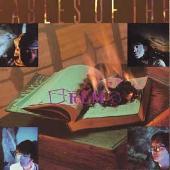
Disco de R.E.M.: “Fables of the Reconstruction”
| Información del disco : |
|---|
| Título: |
Fables of the Reconstruction |
|
|
|
Fecha de Publicación:1998-01-27
|
|
Tipo:Desconocido
|
|
Género:Rock
|
|
Sello Discográfico:IRS
|
|
Letras Explícitas:Si
|
|
UPC:724349347922
|
Análisis de usuario - 17 Noviembre 1999
16 personas de un total de 16 encontraron útil la siguiente opinión:
- Life and How to Live It -- REM and the Southern experience
As a college student in the mid-eighties, we posed the question around the dorm room --- "Did REM make college radio, or did college radio make REM?" Fables is perhaps REM's last hurrah in the college music genre before their foray into an embracing pop culture. After Fables, gone were the twangy folk strains of Peter Buck, the driving bass of Mills, and the incoherent yet hauting howlings of Stipe. Fables is perhaps best experienced as a soundtrack of a drive through the South. The tempos of the first three tracks build to an energy-filled "Life and How to Live It" before taking a short breather with "Old Man Kensey." "Green Grow the Rushes" and "Good Advices" offer introspective commentaries in nicely sonorous melodies. Listen to this album while in a car, being sure to stay off the main roads. Best experienced in mid-summer, turn off the air conditioner and roll down the windows. Notice the landscape around rich in kudzu, Loblolly pines, and red clay. Fables is a perfect accompanyment to the passing sights, smells, and even sounds in the modern South. 13 personas de un total de 14 encontraron útil la siguiente opinión:
- "Time and distance are out of place here..."
At first I didn't like this album. I found it too dark, too murky, too chaotic. Nowadays, I love "Fables of the Reconstruction/Reconstruction of the Fables", probably for much the same reasons. It's certainly one of R.E.M's least accessible albums - certainly not one to recommend to someone in the hope of converting them (try "Lifes Rich Pageant" or "Green" for this). "Fables" is like a good wine - it matures with age and this is perhaps the chief reason why it is so good - it stands the test of time, especially so coming from that unfortunate period known as the eighties. The opening track is stunning - the three jarring notes that open (and recur throughout) "Feeling Gravitys Pull" are indeed memorable - the song itself is filled with terrific imagery ("oceans fall and mountains drift"), seemingly about the beauty and restrictive power of nature. Thematically the rest of the album, as the circular title suggests, is about legends and tales of the deep South. There's folk rock ("Maps and Legends"), the manic "Life and How to Live It" and the cacophonic (and somewhat sluggish) "Old Man Kensey", all inspired by local personalities. "Driver 8" is gorgeous and the first single, "Can't Get There From Here" is probably the most out of place song, being upbeat, funky and happy. The songs which I always thought somewhat muddled and impenetrable, namely "Kohoutek" and "Auctioneer (Another Engine)" I now find to be really enjoyable, while "Green Grow the Rushes" and "Good Advices", two ballads which are soothing and unsettling at the same time, I have always loved. "Wendell Gee" is a song that has often been demonised, but I find it to be an appropriate ending - a quiet, folksy ditty that is a gentle way to wrap up a sometimes stressful and unnerving album, but staying faithful to the Southern theme. It is an extremely well crafted album, but one that, as is the case with my own experience, may require a few listenings to fully appreciate. 8 personas de un total de 8 encontraron útil la siguiente opinión:
- THE DEFINITIVE "NEW SOUTHERN ROCK"
Non-American readers (and Americans who have forgotten their school history) may appreciate a little help in understanding the title and theme of this landmark album.
The "Reconstruction" to which the title refers was a Union plan to rebuild the economy and society of the former Confederate states following the end of the American Civil War (1861-1865) and the abolition of the slavery on which the Old Southern plantation economy had depended. Tragically, following the assassination of the visionary president Abraham Lincoln, the so-called "reconstruction" quickly degenerated into a period of intense exploitation. Over the ensuing decades, millions found that little had really changed, and the ground was laid for some of modern America's most stubborn political issues. Even now in some areas the old divisions still run deep, and it is only really since World War II that the kind of New South that Lincoln envisaged has been realised.
Of course whether you like the fact or not, rock'n'roll was a Southern invention, the first fruits of the New South. This is significant because it represented the sort of cross-fertilisation between black and white musical cultures that would have been unthinkable in the Old South (remember that the earlier jazz crossovers established themselves in the northern cities rather than in their spiritual homeland of the Delta). And it was Lynyrd Skynyrd who first had the cultural confidence to respond to Neil Young's abrasive "Southern Man" and "Alabama" with the stirring affirmation of "Sweet Home Alabama". But by the end of the 1970's a "New Southern Rock" had grown up, a generation of bands that blended exploration with traditionalism and Southern identity with cosmopolitan influences.
R.E.M. quickly developed into the most creative and successful unit in this whole movement, and from the outset they were the purest representation of its substance. They were college boys from the provincial university town of Athens, Georgia, itself a hybrid of industrialism and old world classicism. They were the product of a new industrial middle class that had the capital to educate its kids and the confidence to explore its own cultural identity. And they were obsessive rock fans who even in stardom never attempt to conceal the homage they still pay to their own heroes.
Heated debate over the quality of R.E.M.'s last few albums has tended to eclipse what used to be one of the key disputes among the Athens band's hardcore fanbase: Was Fables a flop? Or was it a masterpiece? "Fables rocks" and "Fables sucks" were two of the competing slogans around at the time. Stories began to circulate about civil war in the London studio where the album was cut, between the band and the established folk-rock producer overseeing the project. Comments in the media gave fans the impression (justified or not) that the band had virtually disowned "Fables", and this in turn put many of their most loyal fans off the album.
In fact at least one member of the band has more recently admitted that it was a "great" album, and this later assessment is much fairer than any of the dismissive remarks made back in the eighties when tempers were still running high. This truly is a great album, the most perfect distillation of the lyrical, musical and sonic approach that first earned R.E.M. a global cult following.
That's not to say it's easy. The sound is murky. The vocals are indistinct. There is a mixture of clashing compositional styles ranging from the sweetest pop to the most jarring angry garage rock. And yet there is so much magic, and there isn't a single song on here that doesn't worm its way into the affections (even the less than universally acclaimed 'Wendell Gee'). Such of the lyrics you can make out are among Stipe's most obliquely deep and meaningful. Many of them revolve round his long-term fascination with the myths, legends and stereotypes of the American South (that's were the above historical intro comes in). The fact that the album title is printed in such a way that it can alternatively be read as "Reconstruction of the Fables" speaks volumes about the spirit in which this has been undertaken.
"Fables" may not grab you on first hearing, but it is the definitive early R.E.M. album. Like all truly classic releases it amply repays the commitment involved in getting to know it well. And I would say that of all R.E.M.'s dozen or so albums, it is the one I am least likely ever to get tired of.
Análisis de usuario - 13 Marzo 1999
7 personas de un total de 7 encontraron útil la siguiente opinión:
- Excellent. Deep. Dark. Moody. First-order art.
I love this album. It is among the most under-listened in the R.E.M. catalogue, yet it will reward the listener many times over.
"Driver 8" is a lovely ballad/impressionistic fable evoking the whimsy, longing and wanderlust which inhabit the heart of the small-town southerner. Its vivid imagery captures the mind.
"Old Man Kensey" is the story of an oddball wanderer. Replete with dense, deep dark musical tones, this song always puts me somewhere in the Okeefenokee Swamp, snakes a-slitherin', spanish moss hangin', 'round about dusk. Or down some deep dark dirt road in the back country of the south about the same time of day.
"Can't Get There From Here" is a fun, rollicking romp about student joyrides to the country from Athens, the home of U of Georgia and the band's birthplace.
"Maps and Legends" has amongst the most beautiful interweavings of bass, lead and rhythm I've ever heard, and lovely vocal harmonies.
"Feeling Gravity's Pull" is a song of epic proportions. Its subject matter: the human longing for omnipotence and immortality. Its accomplishment: coming about as close as humans come to accomplishing the feat as old as the myth of Icarus and Daedalus -- touching the sun, harnessing infinity.
These are but a few of the fine songs on this set. It will reward the dedicated R.E.M. fan. And for those of a poetic and artistic bent wishing to expand their horizons, you can scarcely do better than this album and this band.
5 personas de un total de 5 encontraron útil la siguiente opinión:
- Confident Masterpiece
R.E.M.'s third album, along with Life's Rich Pageant the following year, were R.E.M.'s transitional period, as they grew from college radio heroes to MTV staples. While they may have had more commercial success, this period was also R.E.M.'s richest. Fables of the Reconstruction did not so much improve over Reckoning -- a great record itself -- as mark R.E.M.'s maturity and confidence in the music they were making. With this album, Michael Stipe allowed us to start deciphering his lyrics. Buck, Mills and Berry had become so musically tight that the band started experimenting with the occasional horn section or strings on songs. With this album, R.E.M. gave us some of their very best songs. "Driver 8" is always part of my inner debate as to the greatest R.E.M. song. "Can't There From Here" is great fun. "Green Grow the Rushes" is another beautiful song. As the title of the album suggests, this R.E.M. album has more of a sense of place than any other R.E.M. record, and songs like "Wendell Gee," "Auctioneer," and "Maps and Legends" are musical explorations of the South that was R.E.M.'s home and heritage. This is a great, great album, a worthy part of anyone's music collection. |


 Política de privacidadCondiciones de UsoContacte con Nosotros