Disco de Therion: “Sirius B/Lemuria”
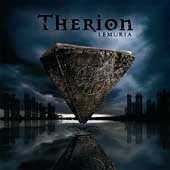 Descripción (en inglés) :
Therion: Christofer Johsson (vocals, electric guitar); Kristian Niemann (acoustic guitar, electric guitar); Johan Niemann (electric double bass, fretless bass).
<p>Additional personnel include: Steen Rasmussen (Hammond b-3 organ, Mellotron); Richard Evensand (drums); Jens Nyborg.
|
Lista de temas :
|
Información del disco :
|
|
UPC:727361129521
|
|
Formato:CD
|
|
Tipo:Performer
|
|
Género:Heavy Metal
|
|
Artista:Therion
|
|
Sello:Nuclear Blast Records (USA)
|
|
Distribuidora:Caroline Distribution
|
|
Fecha de publicación:2004/06/01
|
|
Año de publicación original:2004
|
|
Número de discos:2
|
|
Mono / Estéreo:Stereo
|
|
Estudio / Directo:Studio
|
|
16 personas de un total de 16 encontraron útil la siguiente opinión:
- In a Class by Itself!
My my, Therion's Christofer Johnsson sure has been busy. Not one new album but TWO!
Twenty-one songs! Twenty-one new Therion songs to savor on the new albums, which see Therion taking an overall heavier and a little less melodic direction. A return to their Heavy Metal roots in a couple songs with a touch of raspy growls but it is in conjunction with crunchy guitars and works quite well. This album kind of reminds me of how Dream Theater went heavier on their recent release Train of Thought.
What is the Same
Lemeria and Sirius B still have the elegant soaring choirs we've come to expect in all songs. We still have the familiar Therion Operatic Symphonic Metal sound in about three quarters of the songs, though less pronounced in about half of those.
What is different
Many songs have a stronger more definitive metal presence. A couple songs have elaborate guitar solos. Chistofer Johnsson ingeniously injects the choirs into most of the heavy metal numbers. One very good song, "Kali Yuga part 1", is unrecognizable as Therion. One song Typhon has some Death Metal type Growls and a dance beat and "Feuer Overtüre/Prometheus entfesselt" has some Rammstein style singing. There is a lot more variations from song to song than usual.
For you late comers, here is a little background on Therion. For close to a decade, Therion have been honing their special songwriting style and skills, while pioneering one of metal's newest sub-genres by melding metal with operatic, classical music elements. Numerous bands have attempted to master the highly complex task of fusing ripping metal riffing with symphonic and operatic layers with varied success. Therion on the otherhand, is the creator and preeminent such band and has been able to successfully turn out masterful albums and increase their fan base with each new offering.
Lemuria Track list
4. Three ships of Berik, part 2: Victory!
Sirius B Track list
Summary
If you were hoping Therion's new releases are more of the same wonderful music that was included in Therion albums, Theli through The Secret of the Runes, you may be disappointed. For you, it seems Lemuria may be a safer bet, with more of the older (as opposed to original) style of music with songs such as "Lemuria", "The Dreams of Swedenborg" and "An Arrow from the Sun". However, some of these like "An Arrow from the Sun" and "Son of the Sun" on Surius B have a heavier sound.
Killer Tracks
"Typhon" Therion with a dance beat? Believe it and this isn't the only danceable song. "Typhon" has an uptempo chugging beat and raspy vocals that remind me of Samael with choirs.
"Uthark Runa" Name sounds like something from a John Carter of Mars book but this medium speed song has definite Arabic influences.
"Lemuia" starts slowly with acoustic guitar and an operatic sounding lady singer. This is pretty much a ballad of Therion's older style that picks up nicely and finishes strong.
"Feuer Overtüre/Prometheus entfesselt" a classical feel in the beginning but pretty much a rock number with several styles of singing, Rammstein, clean, multiple vocals and male choir.
"Blood of Kingu" Another song starting out with pomp then quickly becoming a galloping medium fast metal number (sometimes sounding like Black Sabbath) with straight male vocals and an answering lady choir.
"Kali Yuga Part 1" A most interesting song. If you were to play this for me and tell me this was Therion, I'd say sure and Jenna Jameson is a virgin. Kind of an industrial sound with electronically altered vocals, male and female and a slight ethereal feel. This song segues into Part 2
"Kali Yuga Part 2 Tempo picks up and this is a hard driving fast paced number with male and female choirs and a lady singer. Just excellent song.
"Call of Dagon" Kind of a epic sounding number with our operatic lady singer backed by choirs
Conclusion
More than 170 musicians and singers participated in the creation of Lemuria / Sirius B with the recording sessions taking over nine months. With this release, Therion have taken on the challenge of revisiting their roots. Therion have, until now, not been able to meld the harder facets of their early years with the new bombastic symphonic aspects for which Therion have become renown for, like they have on this album!
I like the new direction of Therion. There is nothing wrong with their older material, after all it is all five stars, but this is an exiting change of pace. a fresh perspective from one of the most creative minds in the music industry. I think, in the long run I may like it more.
As usual with Therion, there are no mediocre let alone bad songs. I'm tempted to give all songs five stars but I guess there are a couple that only deserve four and a half stars. This(these) album(s) is(are) in the running for album of the year.
K. Hess (Tukwila, WA United States) - 29 Julio 2004
13 personas de un total de 15 encontraron útil la siguiente opinión:
- In counterbalance..
I didn't give this album five stars for one reason - it's Therion. Had any other band been responsible for this double album, I'd not only have issued five stars, I'd have hailed it as the second coming of Christ.
But this is Therion we're talking about.
Therion.
If the name alone doesn't explain everything, I'll give you a quick background. Until about 1995, Therion was mainly an experimental death metal group, with their 'experimentation' being the sort of minor technical differences that serious metal-heads hail as 'pure genius' as opposed to 'derivative drek'. Flip of a chord here, bass riff where you don't expect it, etc. There was work on a Russian movie soundtrack, certainly, but nothing spectacular. But unlike other bands who toil away at their particular brand of experimentation for years until they decide to return to the same formula they started with in an effort to touch bases with their junked-out former fans who outgrew them years ago, Therion hit on something.
The bridge between heavy metal and classical is a strange one. While it can't be disputed that heavy metal sprang (in a roundabout fashion) from simpler roots, the percolating influences of Elvis and the Beatles and similar acts from before our childhoods, metal in the most advanced tense seems to extend an affinity to that more ancient form, classical. Orchestral. The headbangers of yesteryear were the composers and audiences of such pieces as the 1812 Orchestra, Ode to Joy, powerful pieces like that. And while we can surmise that they probably weren't doing lines of cocaine in their hotel rooms or bodysurfing over ladies fanning themselves in the theater halls, they did indeed share a love of powerful music with our modern sect of volume worshippers. Metallica can do a Phrygian scale too, you know.
Still, these are two very distinct types of music, on different sides of a gulf. With the release of Lepaca Kliffoth, Therion began building an ever-strengthening bridge, poising themselves increasingly between both landmasses, rather than merely incorporating elements of one into the other. The original death vocals? Largely absent by Theli, completely gone in Vovin, Deggial and Secret of the Runes. Guitar-driven metal? Rather more symphony-backed in Vovin, whereas Deggial employed guitars as simply another piece of the orchestra, right alongside the cello, clarinet and tuba. Yes, a tuba.
Simply put, there is no group like Therion in music today. Not one. With most other bands, you can point, and say, 'they sound like Disturbed, with a little Creed mixed in there', or 'pretty much a Skinny Puppy/Einsturtzende Neubauten ripoff'. Therion sounds like nobody, interprets nobody, became nobody but themselves, and have managed to grow and expand their music to where it is its own genre. A difficult-to-pinpoint genre? Certainly, but its own genre nonetheless. In a quickly decaying musical scene, fought over by major record companies bitterly complaining about lowered profits (after releasing, on average, 25% fewer new releases per annum than their bumper crop years) and simply perceptibly bad music, Nuclear Blast should be commended for not only pushing a truly innovative musical act, but helping them succeed through it all.
So how does that relate to this album? Sirius B/Lemuria are barely a double album; the entire album clocks in at a hair over 85 minutes or so, and the dreadful Three Ships of Berik and the barren Sirius B could have easily been dropped to accommodate all of the music on one disc. That being said, there are some spectacular pieces on this disc as well.
Therion in general (see above for a bit of irony) have returned a bit more to their roots; this album does seem geared to please the 'death to false metal' fan more so than, say, the spectacularly symphonic Deggial (quite possibly music's finest hour). Most of the tracks are guitar-driven, and Therion has not been for some time ranked among the technical geniuses of modern metal. Their riffs are generally simplistic in nature and have more appropriately served as the strength behind the orchestral beauty. There are a few blistering solos here and there, but they tend to be shorter and don't dominate the composition like standard metal solos usually do. Typhon, the first track of Lemuria, reintroduces us to the death-metal growl left behind in Symphony Masses: Ho Drakon Ho Megas (a decidedly unsymphonic album, at least in comparison to their modern works), but it's interspersed between a male tenor, a female soprano, a male choir and a female choir alternating vocals. It's quite a kick back and forth, given the beauty of the classical vocals. Uthark Runa is relatively uninspired, and Three Ships of Berik is laughably bad; reminiscent of an over-the-top Rhapsody 'magic shield and sword and dragons' composition. (The song) Lemuria turned into temporarily relief; a deliriously beautiful opening composition is jarred by the same vocals we heard from the Theli era. This was a HUGE mistake, at least in my opinion. Any classical soloist (soprano, tenor, bass, contrabass, alto, male or female.. anyone) could have performed it in some shape or fashion. Quetzalcoatl is pretty but uninspiring at best, hardly memorable. Lemuria turns around at The Dreams of Swedenborg; a jangling, aggressive riff over a mystical backdrop is actually appropriate, and the introduction of the same voice that ruined Lemuria is welcome here, and works. Arrow From the Sun continues the positive trend with a stupendously beautiful soprano chorus as the centerpiece of only the second all-classically vocalized piece on the album (a severe shift of policy on Therion's part). Abraxas is next, with a raw, simple riff underscoring more of the same vocal beauty as Arrow From the Sun. There's a weird hair-metal 'Yeeeeeaaaaahhhh' in the middle of the song which I don't understand at all, but the bulk of the song is good and serious, and it finishes off well. Feuer Overture: Promethus Entfesselt can be pretty much summed up in one word--Rammstein.
Sirius B starts off with an aggressive, if not immediately jarring, power metal track that makes itself unique with a chorus that has to be heard to be believed. Son of the Sun is once again pretty, if not remarkable or terribly memorable, but the Khlysti Evangelist is a nice last break into a rocking heavy metal track before we submerge into the weightier orchestral works toward the end of the album. Dark Venus Persephone is highly forgettable, regrettably. Kali Yuga will wake you back up; a respectable power metal tune accompanied by a very well done second half which finishes the song respectably while more actively leaning on a thunderous male choir. The Wondrous World of Punt is, in my opinion, the best song on the set. The choir here performs magnificently; from the off-rhythm vocals at the beginning to the phenomenal soprano over simple acoustic guitar, joined by the rest of the choir along with woodwinds. The song is swept away at the end by a shockingly aggressive ending that reminds one of Eternal Return from Deggial. Melek Taus and Call of Dagon took a little while to grow on me, I must admit, but they were both welcome in their own way. Call of Dagon is seductively mild and easy to listen to. Sirius B is album filler, unfortunately, but Voyage of Gurdjieff is spectacular. Fast, inspiring, and really a summation of the kind of music that Therion remains; that elusive missing link between classical and metal, the type of music you've never heard until you've heard Therion.
So why only four stars? Simple. Deggial, Vovin and The Secret of the Runes are even better. Is Lemuria/Sirius B a bad purchase? Not by any means. Is it a great purchase? An unqualified, unreserved, absolute yes. Should you buy it first? *Shrug* Maybe, most likely so if you're still a mainstream listener of heavy metal. If you haven't been exposed to the bulk of European goth (which is the closest thing available to Therion, although it's still a mile away), it's one of your better options. Vovin and Lemuria/Sirius B are their most metal-oriented albums of their 'modern' sound, while Deggial is complex and difficult to grasp at first. I even hated it for the first 6 months I owned it. It wasn't that the music was bad, far from it. I was simply unprepared for it, looking for the sweet musical candy of Vovin's more simplistic, if beautiful, melodies rather than the intriguing depth of Deggial's symphonic compositions. Therion has done better than Lemuria/Sirius B. That being said, very few bands have ever done better than Lemuria/Sirius B, even with its shortcomings. Therion is the only group in the world of music to deserve a 4 out of 5 for this effort, simply because of what they have already accomplished. Their work should be not applauded, but immortalized.
4 personas de un total de 4 encontraron útil la siguiente opinión:
- Unrivaled Brilliance - Masters of Symphonic Gothic Metal
After a 2-year absence in recording, Therion finally return with a massive and ambitious double-release, Sirius B / Lemuria. Each disc is considered its own album, and as such I will review them. But first, as a double-release, there are a few things worth mentioning.
The albums are, put shortly, a Therion release that combines Deggial's guitar-work and Secret of the Runes' abundant orchestration. With the aid of the City of Prague's Philharmonic Orchestra, songwriter Christofer Johnsson was given the opportunity of cashing in all his chips and reaping the greatest benefits. All our favorite Therion trademarks are there: epic choirs, memorable riffs and amazing symphonic interludes. To add to the albums' splendor, the art is gorgeous. Every song gets its own page (some get two) with beautifully vivid artwork (similar to Iced Earth's The Glorious Burden).
Sirius B specifically contains songs such as "Son of the Sun" and "Melek Taus", which are everything we have come to expect from Therion and more. Johnsson has also taken the liberty of inviting guest vocal soloists to sing without the aid of choirs, as heard on "Blood of Kingu" and "The Khylisti Evangelist". The album also kicks the speed up a notch, with such rapid-fire songs as "Melek Taus" and "The Voyage of Gurdjieff (The Fourth Way)", the latter of which could easily be considered a power metal song.
Although the entire album is a work of art, there are two truly outstanding tracks. "Kali Yuga Pt 2" has it all: powerful guitars, doom-filled choirs, female operatic vocals, and an energetic symphony driving forth a truly epic song. It is the true aggressive Therion piece. "Call of Dagon" is the release's magnum opus. Mystifying and enchanting, the song's orchestral melodies, coupled with both the male and female choirs, forge a truly magical song, rivaled by no other on the album. The album is not flawless however, as it does have a few less-than-stellar tracks. The title-track, "Sirius B" has a male choir repeating "Po Tolo"; though eerie and haunting, the track never seems to take off. Similarly, "Kali Yuga Pt 1" seems to serve only as an introduction to its awe-inspiring sequel. These songs notwithstanding, Sirius B is an amazing release that shows Christofer Johnsson's desire to make truly remarkable music. No complaints at all; by and far the superior of the two albums.
Lemuria is the more experimental release of the two. When regarding typical Therion fanfare, only "Quezacotl" and the somewhat haphazard "Abraxas" come to mind. The rest of the songs all have something that seem to separate them from the others. "Typhon", the most intense song on both releases, sees the return of Christofer Johnsson as a vocalist, with long-absent death-metal grunts leading the song's chorus (alongside operatic voices and choirs, of course).
The two-track "Three Ships of Berik" suite are the album's most outstanding pieces, perfectly conveying a pagan armada and their eventual victory with absolutely every Therion trick: symphonic accompaniments, choirs, Johnsson's raw grunts, and a fast-paced guitar/drum melody. "Lemuria" and "The Dreams of Swedenborg" are slower, acoustically-oriented pieces (almost ballads) that never quite take off. As both songs end, they seem almost lacking - as if distortion were an inalienable part of Therion's music. "Arrow From the Sun" is a collection of melodies that, after a while, seem to be related. Upon first listen though, the song seems to be an amalgamation of melodies and riffs that somehow form a song. Finally, "Feuer Overtüre / Prometheus Entfesselt" is a collection of heavy-metal verses with a Therion chorus; an interesting hybrid piece that, although fun, is not entirely outstanding. It is not as accessible or "pretty" as Sirius B and requires several listens before one can appreciate the experimental nature of this particular half. After all, even a mediocre Therion track is an amazing song.
See also: Therion - Deggial, Therion - Secret of the Runes,
6 personas de un total de 7 encontraron útil la siguiente opinión:
- A better use of orchestra in metal than usual
Truly an example of Symphonic Metal, this double disc probably goes where all of the half-assed metal acts out there who color their already existing music with an orchestra wish they could go. This is about 100 minutes of a metal band intertwined completely with a choir and symphony--and I think what makes it unique (at least to my collection) is that no part of the music feels like it has been "added" as decoration--the solo singers and the choirs sometimes are the sole carriers of the melody and lyrics, sometimes the orchestra gets to play without being doubled by a guitar. It all works as an organic whole.
I just don't think the music stays fresh over the course of both discs. After a few tunes, the choir seems like it is repeating the same patterns of harmonies, the songs almost never stray from four beats per measure, and none of the instrumental work from the band rises above standard metal riffs. And even though the symphonic writing and presence is way better than most of the discs I own that use a symphony, I wish the orchestral writing was even more intricate. I'm convinced, from the audible symphonic moments, that 95% of the music the orchestra was required to play was sight-readable by the musicians. But considering how much it must have cost to hire them, they probably had limited rehearsal time.
Not to say this isn't fun to listen to (at least a few songs at a time). This does hold a place in my collection as a unique example of metal mixed with classical. There are some very pleasant moments, a few good tunes that will stick with you for a while after you're done listening, a couple of corny songs, and a couple of rather bad songs.
Lyrically, there's an impressive amount of diversity. I thought I knew a lot about mythology, but this double-disc proved to me that I'm pretty shallow in my knowledge. It's been fun to Google many of the names while listening to the disc. A sampling of lyrics here:
"Kingu rules the horned dragons, Ugallu, fishmen, Mushussu, umu, bulls, frogs, scorpions, dogs...Kingu rules the void!
In ancient days of Khem, A Pharoah was praising, The sun above Amon, Osiris, Mother Isis and Thoth.
Kali Ma, Great Durga, black guna of Maya,
See the signs in the end of kala in the yuga.
Sheik Adi, Yezid--Say Hol hola!
The Peacock Lord is here, the Serpent King will rise..As behre Azide Sarun!
Uthark--Code of secrecy
Frey, Frey--God of ecstacy
Rise, rise from Ginnungagap."
You could probably tell--but that is a mishmosh from about five or six different songs off of the two discs. None of it makes much sense, and it is sung by people who are not native english speakers, and mixed in a way that most of the time you'll have trouble following along anyway, so just forget it and enjoy the overall sound being produced. I've purchased a lot of european metal over the years, and some groups can write in english with good phrasing and rhythmic feel for the language, and some have difficulty, which is the case with this disc--lots of unusual pronunciations and interesting syllable emphasis. But hey, I'm certainly not writing ninety minutes of music in another language for full choir, symphony, and rock band, so I'm still impressed (just distracted).
The cover art is beautiful for both discs--you get separate books for each disc, and for those of you with Fantasy-fired imaginations I would imagine this could be great background music for reading your Conan books or for RPG gaming. What would have been VERY cool is if this came out in the heydey of vinyl as a three or four record set with a large liner book displaying the gorgeous interior fantasy art in more proper glory.
3 personas de un total de 3 encontraron útil la siguiente opinión:
- Their most ambitious release to date
Therion have combined the best aspects of all their previous releases & came up with this double CD, which is nothing short of a masterpiece! They've got it all here, death metal vox in some songs, symphonic, epic pieces, with a full-on symphony orchestra & choirs, straight ahead hard rock/metal anthems, mellow, ballady type stuff with operatic vox & everything in between. If you were a fan of Therion before this, I'm sure you'll love Serious B/Lemuria. The sound is even more monumental/grandiose! I also think that their songwriting has improved, the choruses are more catchy & the song structures are even more diverse and interesting. It takes a while to digest the 20+ songs on these 2 discs, but once I did, I kept playing them over & over because they're just that good! If you want to check out Therion this is a good place to start, because it has a little bit of everything! It's almost like a best of album, but all the songs are brand new. Therion are undoubtedly one of the best symphonic Euro Metal bands out there! |


 Política de privacidadCondiciones de UsoContacte con Nosotros