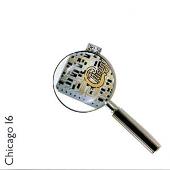
Chicago Album: “Chicago 16”
| Album Information : |
|---|
|
|
Release Date:1990-10-25
|
|
Type:Unknown
|
|
Genre:Pop
|
|
Label:Full Moon/Warner Bros.
|
|
Explicit Lyrics:Yes
|
|
UPC:075992368926
|
Brad (CT) - July 22, 2002
7 of 7 people found the following review helpful:
- My original turn-on to Chicago
The title of this review indicates my age, I guess, as "Hard To Say I'm Sorry" was the first Chicago song I ever heard. Nonetheless, I have listened to Chicago's best of the '70s and '80s over the past 20 years and am still in love with most of it. This comeback album, as others have accurately termed it, was and still is a gem in my music collection.
No, it is not the best Chicago album. Some of the classic '70s stuff is of course better, as are some of the later efforts in the '80s. Nonetheless, this is well worth a listen.
"Hard To Say I'm Sorry" is one of the first singles I fell in love with as a kid growing up, and it still sounds great. A unique song in its day, and a beautiful ballad and huge hit. The other big single on the album, "Love Me Tomorrow" is also great in my opinion; I don't understand why it is so widely criticized. I had never before heard a sound quite like the end of that song--when the electric guitars and violins blend together as the song (and album) comes to an end.
It is a shame that Robert Lamm was such a small part of the band at this time, but Peter Cetera and (on a few tracks) newcomer Bill Champlain shine on the vocals. And for sure, such tracks as "Waiting For You To Decide" and "Rescue You" are fine rockers of a sort--with an '80s flair, of course. The horns are still present on many if not most of the tracks as well at this point, including on the lead track and obscure top 100 single "What You're Missing"--a mid-tempo track.
This truly was a transitionary period for the band that gave them new life. For many who were around when the band originally came to be, this was the end of the band's relevance. But for someone like me, who grew up in the '80s, this band was a true highlight on the popular music scene. If you like strong harmonies and beautiful songs with a bit of rock flare, this album is definitely recommended. Call my overall ranking 4 3/4 stars--just a notch below their best efforts.
T. J. Perhai (Orlando, FL United States) - February 15, 2003
3 of 3 people found the following review helpful:
- A popular and historic album for Chicago.
The main aspect of Chicago 16 is that it brought Chicago back into the area of a Top 40 fan's pop sensibilities, early 1980's fashion. The lead single, "Hard To Say I'm Sorry", did the critical initial task of getting radio airplay and staying in rotation beyond the "death cutoff" of two weeks, when a song would be pulled because it hadn't generated any interest within 14 days (such is pop music life!). Of course as music history, it was significant because "Hard To Say I'm Sorry" became a #1 seller and airplay staple, pushed sales of Chicago 16, and got Chicago a new image. And as a collection, Chicago 16 is far stronger for the production path taken than what happened in Chicago 13 or 14 (15 was the second greatest hits album).
While refreshing in its new style, there are fading trails of older Chicago-pop styles, gone by the next album. "Get Away" is an exceptional track because the horns are essential to the arrangement. I only had problems with the album when songs seemed arranged with the horns as an afterthought. The Chicago style did not always rely on the horns (or brass) in the time before Chicago 16, but it would begin here, and make itself apparent later on, that the sound would become synthesized, and as such blended in with everything else. Other than that one issue, I enjoy this album musically, and for its historic place in the story of Chicago.
pomororro (Somewhere in Time) - January 07, 2001
2 of 2 people found the following review helpful:
- The guys had a resurgence!
New producer David Foster took a strong hand in the making of Chicago 16, co-writing most of the album's songs, also it was Bill Champlin's first album as a Chicago member. Memorable songs such as "Hard To Say I'm Sorry", "What You're Missing?", "Rescue You" and "Love Me Tomorrow" brouqht Chicago back to another generation of rock n' roll fans. 1 of 1 people found the following review helpful:
- Begin The Foster Era
In this fourth era of Chicago - Laudir Oliveira is gone, and the group has decided to focus on a more relevant sound for the 80s. They bring in mega successful producer David Foster, and best of all Bill Champlin. The final solution to replacing Terry Kath ends up being - don't try to replace him . . . he can't be replaced. Instead, do what any smart organization in crisis does: reinvent yourself.
I first heard this album playing in a record store during the summer of 1982. I had all but given up on Chicago. As the songs played, I gradually began to tune in: "this group sounds familiar. Is that Peter Cetera? There's the brass - it's Chicago!" When I heard Bill Champlin singing, I knew that they had made a great move. At first I wondered if it were Jimmy Pankow or Lee Loughnane on steroids (the reason why Champlin is a good fit is because of these similarities).
Anyway - I was overjoyed at the sound of this album, and bought it. For being the most improved over a prior album, this one is clearly #1 for Chicago.
This album was the peak of their Foster era. Unlike most people, I rank it higher even than 17.
If you are even reading this, debating whether or not to buy it - I would say, buy it. I love it!
3 of 4 people found the following review helpful:
- An Impressive Return
"Chicago 16" marked a new chapter for the band with two top-40 hits and a whole new sound. Picked up by Warner Brothers after Columbia Records dropped them (due to poor record sales), Chicago gained a new perspective under song-writer/producer David Foster. Foster, who co-wrote 8/10 songs on the album, not only added himself on keys, but also brought in a load of studio musicians: Steve Lukather, Steve Porcaro and David Paich from Toto; guitarist Michael Landau; guitarist Chris Pinnick, who now is Chicago's main guitarist. With Foster's help, Chicago entered 1982 with a bang that lasted until the end of the decade.
To list three guitarists in the credits only points to the fact of the great loss that the band incurred when Terry Kath died in 1978. The three albums that followed his death up until "16" clearly reflected the devastation the band felt. All three contain some great writing, but it is this reviewer's opinion that the poor record sales of those three albums were a reflection on not keeping current with the trends. When Columbia did not renew the band's contract it was evident that changes needed to be made.
Another change to the mix was the addition of keyboardist Bill Champlin. Bill's husky voice renewed the sound of Terry Kath that had been missing since 1978. He also contributed his song-writing talents to the band in the tune "Sonny Think Twice."
The most memorable tune off of the album is "Hard To Say I'm Sorry." This was a huge hit for the group and has become a staple at concerts. What is unknown to anyone who isn't a fan is the tag a the end of the song, entitled "Get Away." Cowritten with keyboardist Robert Lamm, this tune is a jammin', in-your-face brass number. Having seen Chicago live four times, they extend this tag, which is awesome to listen to. The other hit for the band was the Cetera/Foster tune "Love Me Tomorrow." Though this song has received bad press, I really enjoy listening to it's simplicity. The Rhodes piano against Cetera's voice is sooooo relaxing - absolutely beautiful.
Two of my favorites off the album are two tunes written by James Pankow: "Bad Advice" and "Follow Me." "Bad Advice" is the essence of funk/fusion - great brass, syncopation, and lyrics. It just grooves. "Follow Me" is more mellow , but contains an equal amount of brass, as well as a killer guitar solo that I can only speculate was performed by Steve Lukather, based upon how often I've listed to my Toto collection.
Both Chicago and Toto are two of my favorite bands for one reason - the band members share the wealth in song-writing and lead singing. This provides a great amount of variety and allows the creativity to abound. Though Foster had a hand with this album, the essence of Chicago is still very present - you get to "Chicago 19" and that's a whole different story.
As an aside, I also like the album cover - the Chicago logo embedded into the computer chip. Talk about cool! This cover rates up there with XIV and X. If you haven't checked this album out, you need to. You won't be disappointed!
|