|
The Moody Blues Album: “In Search of the Lost Chord”
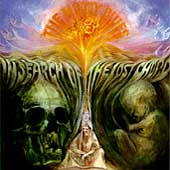 Description :
Moody Blues: Justin Hayward (vocals, acoustic & electric guitars, 12-string guitar, sitar, harpsichord, piano, Mellotron, bass, percussion, tablas); Mike Pinder (acoustic guitar, cello, autoharp, harpsichord, Mellotron, piano, bass); John Lodge (acoustic guitar, cello, bass, tambourine, snare drum, background vocals); Ray Thomas (C flute, alto flute, soprano saxophone, background vocals); Graeme Edge (piano, drums, timpani, tambourine, tablas).
<p>Originally released on Deram (711).
<p>Includes liner notes by John Reed.
<p>The Moody Blues: Justin Hayward, Graeme Edge, John Lodge, Mike Pinder, Ray Thomas.
<p>After helping lay the groundwork for concept albums and progressive rock with 1967's orchestra-enhanced suite DAYS OF FUTURE PASSED, the Moodies retrenched for the follow-up. They abandoned the orchestra but kept their sound as rich as before by playing a multitude of instruments themselves, including everything from sitar to cello to oboe. At the time, it was remarkable enough for these instruments to appear on a rock record, much less to be played by the band itself. The string-laden conceptual pieces of DAYS were replaced by shorter, more concise songs that leaned more toward Beatlesque pop and displayed a pronounced Eastern influence.
<p>Graham Edge's short spoken-word pieces provide a properly arty framework for the Moodies' blend of swooping mellotron, haunting flute, and rich, multi-tracked harmonies. The slightly Hollies-ish "Ride my Seesaw," one of the band's strongest rockers, is a highlight. Flutist/vocalist Ray Thomas provides the quirky Britishness so essential to '60s UK pop-rock with his music-hall-on-acid number "Dr. Livingstone I Presume." The soaring harmonies of "Legend of a Mind" work in praise of Timothy Leary and his "trips to astral planes." IN SEARCH OF THE LOST CHORD is the most exotic, trippy album in the Moodies' catalog.
|
Track Listing :
|
Album Information :
| Title: |
In Search of the Lost Chord |
|
|
|
UPC:042284476829
|
|
Format:CD
|
|
Type:Performer
|
|
Genre:Rock & Pop - Art Rock
|
|
Artist:The Moody Blues
|
|
Producer:Tony Clarke
|
|
Label:Polydor (USA)
|
|
Distributed:Universal Distribution
|
|
Release Date:1997/05/20
|
|
Original Release Year:1968
|
|
Discs:1
|
|
Length:42:12
|
|
Mono / Stereo:Stereo
|
|
Studio / Live:Studio
|
|
34 of 34 people found the following review helpful:
- The Experimental Moodies
With the huge success of their landmark classical-meets-rock album, 1967's "Days Of Future Passed," and it's smash hit single, "Nights In White Satin," the Moody Blues had beaten the odds & successfully transformed from the rhythm & blues combo of "Go Now" fame, to the masterful progressive-rock band known the world over. For the follow-up disc, 1968's "In Search Of The Lost Chord," the Moodies decided to retain the classical instruments from their previous hit album, with one major difference: they would play all the instruments themselves, including cello, oboe, harp, harpsicord, and, for a touch of Indian-flavored music, sitar. "In Search Of The Lost Chord" is arguably the Moody Blues' most psychedelic album, but it is also one of their all-time greats. Bassist John Lodge's rockin' "Ride My See-Saw," and flautist Ray Thomas' wonderful ode to Timothy Leary, "Legend Of A Mind," remain Moody Blues concert staples to this day. There's also Thomas' playful "Dr. Livingstone, I Presume," the experimental delights of Lodge's "House Of Four Doors" (with "Legend Of A Mind" sandwiched within it), guitarist Justin Hayward's beautiful "Voices In The Sky," "Visions Of Paradise," and "The Actor," keyboardist Mike Pinder's spacious "The Best Way To Travel," and the spiritual "Om," and drummer Graeme Edge's fine poetry in the forms of "Departure" and "The Word." Marvelously written, played, & sung by the band, handsomely produced by Tony Clarke, and remastered for superior sound quality, "In Search Of The Lost Chord" remains one of the Moody Blues' finest works. 17 of 17 people found the following review helpful:
- AFTER AN EXCELLENT FIRST ALBUM, A GREAT NEXT STEP!!
After listening to DAYS OF FUTURE PASSED, I got so impressed with Moody Blues music that I had an enormous interest in listening their second album. Normally many groups, after a great and succesful first album -in this case it was the first with Justin & John-, they try continue to follow the style they began and repeat themselves. But, in this album, we see it didn't happen. This album IN SEARCH OF THE LOST CHORD was as great and extraordinary as their predecesor. It captured the Eastern sounds and it showed how a band must experiment with the music and their sounds without being something extremely complicated. Sincerely when I heard first time this album, I was in ectasy. I couldn't believe such a peaceful and wonderful music I was discovering, it was like a hidden treasure for me. From the beginning with the funny laugh of Graeme till the last song, the relaxed tarck called Om, we feel like we were travelling to Eastern places. It really continue with the conceptual albums, and the idea for House Of Four Doors -which included Part 1, Legend Of A Mind & Part. 2- is simply brilliant. My fave tracks here are: Never Comes The Day, House Of Four Doors, Voices In The Sky and Legend Of A Mind. This album showed why the Moody Blues have been considered as one of the best Classic Rock bands in the world, and their first 7 albums are considered as real gems of music. 12 of 12 people found the following review helpful:
- The Moody Blues At Their Most Mystical
I have the first two Moody Blues albums in the new 2008 remastered format so far. "In Search Of The Lost Chord" is the most psychedelic of all Moody releases. The new remaster sounds really crisp and clean. The drums sound especially good, compared to previous cd issues, on which they have a muddy sound. Ray's flute sounds brilliant with all the other exotic instruments on this album. There is a certain warmth that is missing on this re-issue. I have read about the use of a "quad" version for these remasters, but the 1997 remasters, to me, hardly beat the first cd issues of these classics from the beginning of the cd era. I always knew they could sound better. The only complaint I have at this point is that the 2008 remaster of "Days Of Future Passed" has really obvious crackling sounds in the master tapes after the song "Peak Hour." But, the bonus tracks, more than anything else, have made these remasters worth their cost. Only four songs from "Prelude (1966 - 1969)" haven't appeared on one of these '67-'68 Moody Blues remasters. "Please Think About It," which sounds like a '50s R&B classic, was always one of my favorites from that collection. "Long Summer Days" was also very good, not to forget "Gimme A Little Somethin'" and "King & Queen." Anyway, I will probably purchase the remaining "Core 7" 2008 remastered Moody Blues cds in the near future. So far, the two I have purchased have been worth the price. Matt Walsh (Pepperell, MA United States) - February 12, 2001
11 of 11 people found the following review helpful:
- A spiritual journey
They had done the symphony thing and pulled it off with flying colors. But this follow-up was pure, 100% Moody Blues. Of the 32 (!) different instruments used on this album, every one of them was played by one of the five band members. With this and other albums, they earned the nickname of "the world's smallest symphony orchestra."
This album is a journey, from beginning to end, in search of the chord and many other things. There is a heavy Eastern Philosophical influence, especially on the Mike Pinder contributions (Best Way to Travel, Om.) The songs flow into each other beautifully, making it sound like one continuous song. In every song, the singer yearns for something which that can never be defined in words. Mike Pinder's searing mellotron and Ray Thomas's soaring flute are the definitive sounds of the album.
Of course, this is the album that yielded two of the Moodies greatest and most enduring concert pieces, the rollicking "Ride My See-saw" and psychadelic "Legend of a Mind." Another standout is "The Actor," A Justin Hayward ballad so haunting it is in the same league as "Nights in White Satin." Then there's the lovely "Voices in the Sky," and John Lodge's epic, expermental "House of Four Doors," which samples musical styles throughout history.
This album is absolutely loaded with beautiful, experimental music. Why this band is so often not considered a part of the Prog Rock genre I'll never know.
8 of 8 people found the following review helpful:
- Never sounded this good
I've bought a number of stereo only SACDs that sounded good, but not noticeably better than the CD.
Happily, that's not the case with this stunning remaster of the Moodies' best album. I've been listening to "Lost Chord" for 38 years, and it's never sounded anywhere near this good. SACD does offer a more precise soundstage (that is, the location of the channels) and a fuller, richer sound, and this is the best example of this I've heard so far.
Like others, I'd have liked a surround sound mix, but with sound quality this good, I can live without it. If you have an SACD player, you should get this disc. As Eric Burdon once said, "It *will* be worth it!"
|


