|
The Moody Blues Album: “Long Distance Voyager”
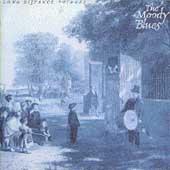 Description :
The Moody Blues: Justin Hayward (vocals, guitar); Ray Thomas (vocals, flute, harmonica); John Lodge (bass, background vocals); Patrick Moraz (keyboards); Graeme Edge (drums).
<p>Additional personnel: The New World Philharmonic.
<p>The Moody Blues: Justin Hayward (vocals, guitar); Ray Thomas (vocals, flute, harmonica); Patrick Moraz (keyboards); John Lodge (bass, background vocals); Graeme Edge (drums).
<p>Additional personnel: The New World Philharmonic.
<p>LONG DISTANCE VOYAGER signaled the revitalization of the Moodies. After a six-year layoff, they'd regrouped for 1978's OCTAVE, which met with mixed reviews. Three years later, the updated sound of VOYAGER brought them back to the top of the charts. Ex-Yes keyboardist Patrick Moraz's synthesizers replace Mike Pinder's Mellotron, and there's a distinct early-'80s sheen to the upbeat hits "Gemini Dream," which chronicles the band's comeback efforts quite literally, and "The Voice." "Talking out of Turn" sounds like nothing so much as a more sophisticated Little River Band, but one cannot deny its gentle, bouncy appeal.
<p>Gentle, acoustic ballads like "In my World" and "Nervous," however, wouldn't sound out of place on ON THE THRESHOLD OF A DREAM. For the diehards, Ray Thomas (whose flute is conspicuously absent in much of this '80s-centric production) provides that essential element of quirky British theatricality with his closing, self-referential triptych of "Painted Smile," "Reflective Smile," and "Veteran Cosmic Rocker." The last of these offerings proves that the Moodies have more self-knowledge than their critics would like to believe.
<p>LONG DISTANCE VOYAGER signaled the revitalization of the Moodies. After a six-year layoff, they'd regrouped for 1978's OCTAVE, which met with mixed reviews. Three years later, the updated sound of VOYAGER brought them back to the top of the charts. Ex-Yes keyboardist Patrick Moraz's synthesizers replace Mike Pinder's Mellotron, and there's a distinct early-'80s sheen to the upbeat hits "Gemini Dream," which chronicles the band's comeback efforts quite literally, and "The Voice." "Talking out of Turn" sounds like nothing so much as a more sophisticated Little River Band, but one cannot deny its gentle, bouncy appeal.
<p>Gentle, acoustic ballads like "In my World" and "Nervous," however, wouldn't sound out of place on ON THE THRESHOLD OF A DREAM. For the diehards, Ray Thomas (whose flute is conspicuously absent in much of this '80s-centric production) provides that essential element of quirky British theatricality with his closing, self-referential triptych of "Painted Smile," "Reflective Smile," and "Veteran Cosmic Rocker." The last of these offerings proves that the Moodies have more self-knowledge than their critics would like to believe.
|
Track Listing :
|
Album Information :
| Title: |
Long Distance Voyager |
|
|
|
UPC:042282010520
|
|
Format:CD
|
|
Type:Performer
|
|
Genre:Rock & Pop - Art Rock
|
|
Artist:The Moody Blues
|
|
Guest Artists:The New World Philharmonic
|
|
Producer:Pip Williams
|
|
Label:Threshold (PGD)
|
|
Distributed:Universal Distribution
|
|
Release Date:1987/07/07
|
|
Original Release Year:1981
|
|
Discs:1
|
|
Recording:Analog
|
|
Mixing:Analog
|
|
Mastering:Digital
|
|
Mono / Stereo:Stereo
|
|
Studio / Live:Studio
|
|
Matt Walsh (Pepperell, MA United States) - February 15, 2001
19 of 20 people found the following review helpful:
- What a comeback!
The Moody Blues made seven extraordinary albums in six years in the late 60's and early 70's, then broke up for half a decade and reunited for the disappointing "Octave" in 1978. Three years later, they exploded onto the 80's pop scene with a fantastic new album that exceeded all expectations.
What made this album even more impressive was that the band succeeded so completely despite a crushing blow: the loss of keyboardist and singer/songwriter Mike Pinder, who left the band to raise a family. Pinder was an extremely important part of the band's sound, but the Moodies simply re-invented their sound with new keyboardist Patrick Moraz (from Yes.) It was a little flashier and a little less haunting, but their fantastic song-writing skills and collective talent made the album shine.
This album had two big hits: Justin Hayward's awesome rocker "The Voice" and the Hayward/Lodge composition "Gemini Dream," about the Moodies' return to the rock scene. But every song on here is an absolute gem, especially the gorgeous ballads "In My World" and "Nervous," Graeme Edge's riveting "22,000 Days" and Ray Thomas's closing trilogy, "Painted Smile/Reflective Smile/Veteran Cosmic Rocker", which is experimental rock at its most impressive and energetic.
This album is extremely uplifting, powerful, beautiful and inspirational, and it ROCKS. They wouldn't make another album this good until 1999's "Strange Times," and even that doesn't live up to the grandeur of "Long Distance Voyager." If there's one post-classic-period album that lives up to those first seven masterpieces, this is it!
16 of 18 people found the following review helpful:
- The Re-Birth Of The Moody Blues
With the departure of their longtime keyboardist Mike Pinder in 1978, the Moody Blues saw one major chapter in their long musical career come to a close, and, with the dawn of the 80's, it was time for the Moodies' second chapter to begin. Obviously, the band's first hurdle to get over was to get themselves a brand-new keyboardist, but who could possibly step into Mike Pinder's giant shoes? Enter Patrick Moraz, the one-time keyboardist for Yes (he played on 1976's "Relayer"). Moraz's contribution to the Moodies was NOT to play mellotron as Pinder did, but to add a more synthesized, 80's-friendly keyboard sound to the band. Some fans pondered whether or not the Moody Blues could survive without Mike Pinder, but the finished album, 1981's "Long Distance Voyager," was a HUGE success, both creatively and commercially, hitting #1 on the U.S. album chart. Mike Pinder may be missed, but there's no denying the freshness that Patrick Moraz's keyboard touch brought to the Moody Blues, and, on top of that, the band rose to the challenge and came up with some truly fantastic songs. Not only does "Voyager" feature the Moodies staples "Gemini Dream" and "The Voice," but also such gems as John Lodge's lovely "Talking Out Of Turn," and Justin Hayward's gorgeous "In My World" (interestingly, both tracks clock in at exactly 7 minutes 17 seconds). Drummer Graeme Edge contributes the thunderous, steady rocker "22,000 Days," one of his very best songwriting contributions to the band, while flautist Ray Thomas wraps the album up in a playful, colorful bow with the circus-themed "Painted Smile," the poem "Reflective Smile," and the classic Moodies shuffler, "Veteran Cosmic Rocker." With "Long Distance Voyager," the Moody Blues re-invented themselves and entered the 80's with tremendous power. "Long Distance Voyager" is one of the Moodies' all-time greatest albums. 9 of 10 people found the following review helpful:
- Go The Distance
1981's Long Distance Voyager was the first Moody Blues release in three year since 1978's Octave which did not perform well on the charts. The band had to be wondering where their music would fit into the new wave music scene of the time. They needn't have worried as the album shot up to number one and became the biggest selling album of their careers. The album has a heavy synthesizer sound to it thanks to their new keyboardist Patrick Moraz (formerly of Yes), but underneath that it is all classic Moody's. "Gemini Dream" & "The Voice" were big hits and they are both synth driven rockers. "Talking Out Of Turn" is a strong song as is "22,000 Days", but the best track on the album is the gorgeous "Nervous". Harking back to their Days Of Future Passed sounds, the song has a large orchestration with alot of strings and a choir sound. It is simply the best song on the album and one of their best ever. Long Distant Voyager isn't their most ambitious release, but from start to finish, you won't find a better Moody's album. 8 of 9 people found the following review helpful:
- One of the best, if not THE best
This just might be my favorite album of all time. Of course I'm biased, as my father used to play the tape of this album all the time when I was a kid. As I got older, I came recognize the meaning of the lyrics and grew to like it more. Now, I see recognize that it's not good music, and it's not just the Moody Blues. This album is a work of genius. Everything flows and transitions wonderfully. In particular, the transition from 22,000 days to Nervous, and the from Painted Smile to Reflective Smile to Veteran Cosmic Rocker is awesome.
The Voice is a great upbeat song about getting in touch with yourself, and talking out of turn is a good song about relationships, but previous reviews hit the nail on the head when they said that Nervous is the best song on the album. With its fantastic use of ochestration and guitar, and the perfect change of rhythm, it's truly one of the greatest songs I've ever heard. Anyone who loves the Moody Blues should own this album. Anyone who likes classic rock or just classic songs should definitely check it out.
Customer review - July 21, 1998
7 of 8 people found the following review helpful:
- Top of the Charts Album for The Moodies
This album charted Number 1, in it's initial release year, which coincided with the return of all the band members, except original keyboardist Mike Pinder, who had departed midway through the bands previous studio/tour album, Octave.
Pat Moraz was a nice addition to the group, but the loss of Pinder signaled an end to the original 'sound' that the Moodies became known by.
However, this album is still their finest achievement to date, save for the original Core 7 albums. No self-effacing Moody Blue's fan would be without this album. Of particular interest, there are 4 very strong songs on this album that receive continuous airplay today, (mostly classical rock stations) more than 18 years after they were first penned. (The Voice, Gemini Dream, Talking Out of Turn, Veteran Cosmic Rocker ...) Justin's solo ballads, for which he has become notorious, are present here, as well. They are always welcome additions to any Moody Blue's album, since they harken back to the m! ystical sounds of albums such as To Our Children's Children's Children.
Good work never goes out of style ....enjoy this classic album ...
|


