|
Disco de The Moody Blues: “A Question Of Balance: Deluxe Edition”
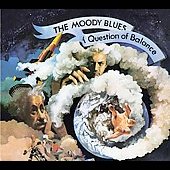 Descripción (en inglés) :
This is a hybrid Super Audio CD playable on both regular and Super Audio CD players.
<p>The Moody Blues: Justin Hayward (vocals, guitar); John Lodge (vocals, bass instrument); Ray Thomas (flute, harmonica); Mike Pinder (keyboards); Graeme Edge (drums, percussion).
<p>The beautifully remastered version of the Moody Blues's 1970 back-to-basics album (translation: they cut way back on the overdubs) strips away the original aural murk at last, and includes informative liner-note interviews with the band about the recording process. Standout tracks include the classic sort-of protest song "Question" and "It's Up to You," one of singer/guitarist Justin Hayward's most authoritatively wistful riff-rockers.
<p>There is a clear attempt to pare back the lush excesses of their earlier work in favor of a leaner rock sound, as heard on cuts like John Lodge's pell-mell "The Tortoise and the Hare." Still, one of the album's standouts is Ray Thomas's "And the Tide Rushes In," a lovely psychedelic ballad of the sort that moved the Who's Pete Townshend to remark that the Moody Blues' albums were so gorgeously produced that listening to them was like "being in church." A QUESTION OF BALANCE is a fine album, and a clear preparation for its successor EVERY GOOD BOY DESERVES FAVOUR, one of the band's finest moments.
Lista de temas :
| 1 |
Question Video |
|
| 2 |
How It Is (We Are Here) |
|
| 3 |
And the Tide Rushes In Video |
|
| 4 |
Don't You Feel Small Video |
|
| 5 |
Tortoise & The Hare |
|
| 6 |
It's Up to You Video |
|
| 7 |
Minstrel's Song |
|
| 8 |
Dawning Is the Day Video |
|
| 9 |
Melancholy Man Video |
|
| 10 |
|
|
| 11 |
Mike's Number One - (previously unreleased) |
|
| 12 |
Question - (previously unreleased, alternate version) |
|
| 13 |
Minstrel's Song - (original mix, previously unreleased) |
|
| 14 |
It's up to You - (original mix, previously unreleased) |
|
| 15 |
Don't You Feel Small - (original mix, previously unreleased) |
|
| 16 |
Dawning Is the Day - (full original mix, previously unreleased) |
|
|
Información del disco :
| Título: |
A Question Of Balance: Deluxe Edition |
|
|
|
UPC:602498377062
|
|
Formato:CD
|
|
Tipo:Performer
|
|
Género:Rock & Pop - Art Rock
|
|
Artista:The Moody Blues
|
|
Productor:Tony Clarke
|
|
Sello:UME Imports
|
|
Distribuidora:Fontana Distribution
|
|
Importado:UK
|
|
Fecha de publicación:2006/06/06
|
|
Año de publicación original:1970
|
|
Número de discos:1
|
|
Mono / Estéreo:Mixed
|
|
Estudio / Directo:Studio
|
|
49 personas de un total de 53 encontraron útil la siguiente opinión:
- Question No More About The Best In Sound!
"Question Of Balance" was a high-hitter for the Moody Blues and with this set, not only do you get the fantastically crisp sound of SACD, but they have finally released some rare tracks. All the bonus and alternate mix tracks are of fine quality and the difference may be as subtle as additional back-up vocals or extra instruments. Here is the complete list:
Question
How Is It (We Are Here)
And The Tide Rushes In
Don't You Feel Small
Tortoise & The Hare
It's Up To You
Minstrel's Song
Dawning Is The Day
Melancholy Man
Balance
Extra songs:
Mike's Number One (Bonus Track)
Question (Alternate Version) (Bonus Track)
Minstrel's Song (Original Mix) (Bonus Track)
It's Up To You (Original Mix) (Bonus Track)
Don't You Feel Small (Original Mix) (Bonus Track)
Dawning Is The Day (Full Original Mix) (Bonus Track)
No previous Moody Blues album has contained such rare BBC sessions, outtakes and alternate mixes. The differences are subtle but many include backup vocals, new instruments and a different pacing to the songs. One needs no other recording of this classic album. The box is half plastic and half cardboard which might not last as long as a regular CD package. However, the liner package notes are exhaustive with many new pictures and a complete history.
(Note: This is an SACD mix made from the original quadraphonic tapes. The extra songs are the original remastered quadraphonic tapes - not SACD).
J. McCranie (Brunswick, GA United States) - 23 Febrero 2000
27 personas de un total de 31 encontraron útil la siguiente opinión:
- Probably their best
I think this is probably the best album by the Moody Blues, although I have only a few of them. I think that there are no weak songs, and each member wrote or co-wrote least two of the ten songs.
This is also a great job of remastering. It sounds much better than the original CD.
The LP originally had the end of a track overlapping with the beginning of the next track. Side 1 of the LP ends on a fairly loud note, and side 2 started with some quite and delicate acoustic guitar notes. The original CD release overlaped these as well, to stay in the spirit, I suppose. However, I didn't like it that way. The nice guitar part on track 6 was obscured, and the LP had been designed with a pause between the sides. The remastered version restores a few seconds of a pause between tracks 5 and 6, making it more faithful to the original LP.
12 personas de un total de 13 encontraron útil la siguiente opinión:
- Fascinating Wild Exploration of Environmentalism!
As with their earlier concept albums, the opening cut of this final of the several such concept albums released by the Moody Blues in rapid fire succession tells it all, a provocative, thoughtful, and intellectually fascinating exploration of a range of problems of rescuing the environment in a world wildly out of control. As in their previous albums, the Moody Blues use a rock style fusing mainstream rock music and eastern musical forms, and with a singular virtuosity that is spellbinding to listen to. No one carried such musical explorations with more panache and style than the Moody Blues, who, to their great distress, quickly became a kind of cult force in popular culture, making them pop icons overnight.
This is an intriguing album, and a valuable introduction for the uninitiated to the wild range of talents and interests of the various members of the band, and is a showcase for their musical virtuosity. From the opening mysterious number introducing the now-familiar concept of individuals feeling helpless and impotent in the face of the mindless corporate and technological forces polluting the environment and despoiling the earth. It builds on the earlier albums in the sense it follows the countercultural ideas as well as the precepts of outspoken critics of mainstream society like Lewis Mumford and others decrying the destructive tendencies of science and technology. The mood of thoughtful exploration of the issue is established, and we are in for another wondrous mind ride that the Moodies were so singularly famous for. The rest of the album focuses increasingly on aspects of this tension with an individual's needs and rights and ways of being life-affirming in the age of the machine.
This is classic stuff, with the lyrics, melodies, and extremely artful arrangements supporting the search for identity. My favorites here are "Question", which was a huge popular hit for them, "It's Up to You", and "And The Tide Rushes In". As always, they mine the range of modern rock with more panache and virtuosity than anyone else. This is classic Moody Blues material, and they mine this genre in a way uniquely their own. I would start with "In Search Of The Lost Chord", and work my way deliciously through "On The Threshold Of A Dream", "To Our Childrens' Childrens' Children", and finally to this album, "A Question Of Balance", which comprises the real close of this phase of their concept album series. All of them are thoughtful, artistically well expressed, and a timeless celebration of what it means to be human. I highly recommend all their albums. Enjoy!
7 personas de un total de 7 encontraron útil la siguiente opinión:
- The Moody Blues face The Dark Side
For the very first time in Moody Blues (the reorganized group which produced the "modern" sound we know as Moody Blues) recording history, two firsts occurred. A QUESTION OF BALANCE dealt directly with modern political, almost protest, subject matter, rather than centering their efforts on spiritual and speculative introspection dealing with the human condition alone. Here, The Moody Blues addressed the Vietnam War, ecological carelessness (pollution, overpopulation, environmental exploitation), and painted a bleak picture of humanity in general. Secondly, The Moody Blues recorded this album without the lush orchestrations and overdubs which dominated all their prior albums. They recorded in as much a manner as they could perform the songs in concert without sounding entirely stripped down. The result was a fantastically organic album that neither departed from their inherent natural sound, nor sacrificed the beauty of their compositions. Even without all the usual overdubbing and orchestration, between the acoustic fullness of their instruments, the lead electric guitars, the astounding mellotron, and the driving drums by Edge, The Moody Blues had lost nothing in the translation!
Additionally, not only is the instrumentation on QUESTION less "lush", consequently it became more "rock" and accessible to a wider audience, leading it to chart in the USA much higher than any previous album (#3 in the US and #1 in UK). Pinder, already playing 12-string acoustic guitar, piano, harpsichord, organ, mellotron, (not to mention on earlier albums: upright bass, cello, autoharp, tambura) now added the Moog Synthesizer to the Moodies sound. Justin Hayward had been experimenting with his lead electric guitar tones over the course of 4 previous albums and on QUESTION he added numerous effects pedals and fuzz boxes and "developed for himself a very melodic buzzing guitar-solo sound" (quote from liner notes). Check out the background lead guitar on Pinder's How Is It We Are Here and you will hear the same classic buzz guitar that predominates the Blue Jays album (with John Lodge) and some of his other solo album songs.
The song Question has always been attributed to Vietnam, even though the wording is more generically useful as the Everyman addressing War in general. Question was actually recorded in just one take, with no double-tracking, no overdubbing. A unique rocking/ballad/rocking format with heartfelt vocals and strong 12-string acoustic guitar lead, accented with mellotron, tambourine, and drums (and a very subtle bass line), it was a perfect winner for chart success. How Is It We Are Here by Pinder plays with mellotron and moog leads, accented by fuzzy guitar, it is Pinders casual questioning of man's incessant need to rape mother earth and questions just how smart we really think we are. According to Ray Thomas, And The Tide Rushes In was promptly written after an argument with his wife, easily discernable in the lyrics, however the song can also illustrate a discourse between man and nature which lends itself perfectly to the overarching theme of the album. Don't You Feel Small by Edge is another of his non-poetry rock songs, he whispers the lyrics over the harmonized vocals of Hayward and Lodge, and again Man and Nature are measured against each other as we are asked to "look at progress, then count the cost". John Lodge's Tortoise And The Hare is a highlight on the album with its rabbit-racing drumming and Justin's superb lead guitar. Speaking of Justin and John, It's Up To You and Minstrel Song are both beautiful soft-rock songs with intricate guitar detailing. Then come the two real highlights of the album (for me). Dawning Is The Day is a simply gorgeous mother-nature love song, delicate yet vibrant, Justin's vocals are spot on perfect and this one ranks up with his best written songs ever. Curious fact is that most people my age and tad older will recall that the words and melody were used in a Lady Clairol commercial during the 70's. I guess that is just as much a sellout as Carlos Santana allowing Evil Ways to be used in a "should a gentleman offer a lady a Tiparillo" advertisement? After this beautiful expression of love to mother earth, comes the heavy hitter. Melancholy Man is perhaps, no, it is truly. Mike Pinder's hardest most gut-wrenching song. Melancholy Man is a heavy mellotron-laden with Moog assistance, no holds barred, accusatory and prophetic, lament on the state of planet earth and a vision of destruction and woe. He uses near-biblical prose to deliver one of The Moody Blues saddest and biggest songs. This song actually was a number one hit in France (go figure), was an FM staple, and is a huge fan-favorite, not to mention one of mine! No overdubbing necessary because the mellotron can be an entire orchestra if needed (for as long as it works before breaking down) the lead keys on Melancholy Man will make your hair prickle at the back of your neck and just might bring tears to your eyes. The storm grows so strong in this song that the fade out and flute-gentle mellotron opening to the Edge/Thomas finale, The Balance, is a welcome and uplifting climax to the album. Never have two songs (it is always darkest just before the dawn) so perfectly given a novel/movie plot ending as Melancholy Man and The Balance do. When you think the story is going to have the saddest ending possible, the protagonist switches batters in the bottom of the 9th, and Pinder reads Edge's message of love and forgiveness to provide us all with at the least, a hope of a happy ending. Justin, John, and Ray give uplifting, angelic backing vocals and the story closes with The Balance, necessary to solve all the problems (questions) that were laid at this particular table.
Although The Moody Blues would return to their lush production styles on EVERY GOOD BOY DESERVES FAVOUR and 7TH SOJOURN, the rock writing style and the more progressive rock edge dynamic which is pioneered on QUESTION will be carried over onto both of those albums, to the point where these last three of the core-7 albums will actually win, place, and show on the charts, on both sides of the Atlantic, a feat which demonstrates the universal appeal that grew with the Moody Blues over the course of 7 albums in six short years. Anyone who like solid classic rock, progressive (art) rock, or just good rock and roll with meaningful lyrics, terrific hooks, and intricate instrumentation with orchestral flourishes, will love A QUESTION OF BALANCE.
Análisis de usuario - 13 Febrero 2001
6 personas de un total de 6 encontraron útil la siguiente opinión:
- good stuff
Being in my opinion one of the best (and my personal favorite) albums The Moody Blues has ever put out, I was extremely surprised to find that this CD hasn't gotten one review so far. I'll make this review short, but this album has amazing songs with some very beautiful melodies. Highly recommended. |


